
Key Technology Trends Reshaping the Seafood Processing Industry in 2026
February 27, 2026
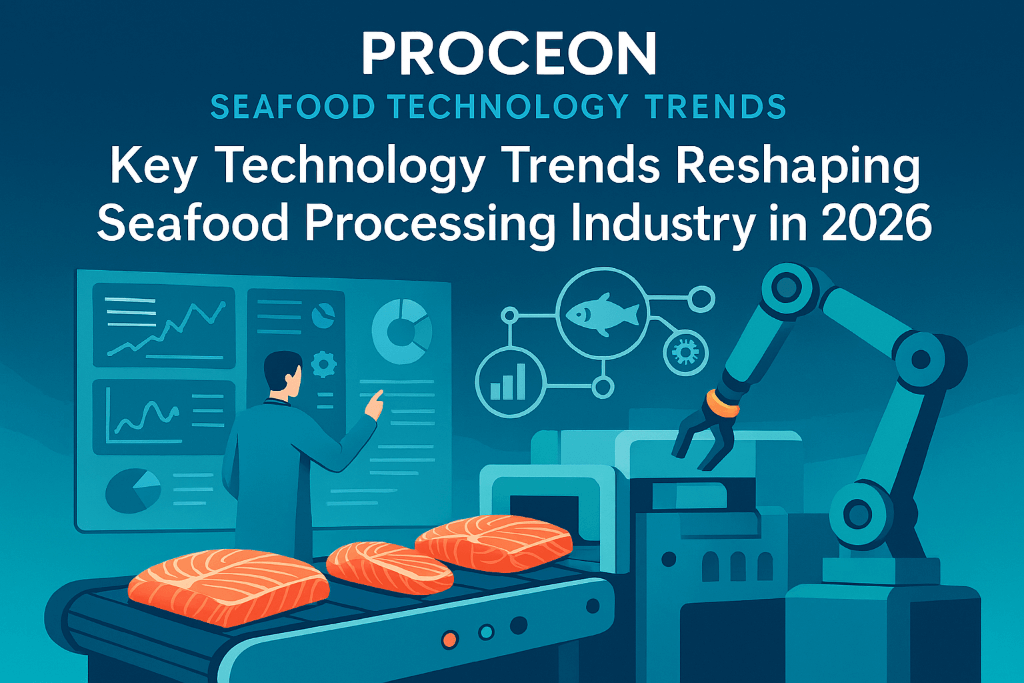
Key Technology Trends Reshaping the
Seafood Processing Industry in 2026
The seafood processing industry is facing a significant modernization gap and entering a pivotal transformation period, driven by rapid advancements in automation and AI-enabled operational intelligence. As global demand grows, regulations tighten, and fishing quotas shrink, processors are under increasing pressure to boost efficiency, secure uptime, and demonstrate compliance and sustainability across the value chain.
Emerging technologies are reshaping competitive advantage — from smart, connected equipment to predictive maintenance and AI-driven solutions. The global food automation market was valued at USD 14.85 billion in 2025 and is projected to reach USD 23.4 billion by 2031, growing at a compound annual growth rate of 7.9%, with meat, poultry, and seafood representing approximately 24% of total demand.
In this landscape, companies that embrace innovation early will be best positioned to drive critical transformations, achieve operational excellence, and meet evolving customer expectations.
1. Predictive Maintenance & Smart Equipment Connectivity (AI + IoT)
AI-powered predictive maintenance platforms are designed to reduce unplanned downtime, optimize spare parts usage, and extend machine life. This trend is accelerating across seafood and broader food processing, driven by:
- Reliability issues with aging fleets of high-tech processing machines
- Shrinking availability of experienced service technicians
- Rising costs of unplanned downtime and emergency repairs
- Longer lead times for spare parts and ongoing supply chain disruptions
The cumulative cost of minor production stops alone can easily exceed USD 1 million per year — and industry-wide research shows that unplanned downtime in food processing can cost facilities up to USD 30,000 per hour. When critical components fail at the worst possible moment, the broader market impact can be far greater and difficult to fully quantify.
These pressures are increasingly shifting plants from reactive and scheduled maintenance toward condition-based and predictive maintenance on all critical assets.
2. Increased Automation & Labor-Saving Technologies
Industry insights highlight a strong shift toward greater automation, driven by the need to improve yield, reduce reliance on labor, and enhance processing consistency. This momentum continues to accelerate as producers seek scalable, efficient solutions to meet growing global demand.
Expect innovations especially around:
- Automated filleting and trimming for species with complex morphology
- High-throughput grading and batching
- Vision- and AI-driven quality control solutions
- Robotic handling that minimizes product damage and contamination
Labor scarcity, pressure for consistent quality, improved yield, and growing demand will continue to push processors toward enhanced automation.
3. Data-Driven Optimization & Plant-Wide Intelligence
The industry is reaching its next digital inflection point: fully connected production ecosystems where integrated systems, unified data flows, and intelligent analytics unlock higher performance. The imperative now is to break down the data silos created by individual equipment providers — replacing them with cohesive, real-time operational visibility and AI agents capable of automating complex decision-making processes and delivering deeper insights across processing, quality, and maintenance operations.
These initiatives position companies to move faster, operate smarter, and outperform competitors in an increasingly data-driven seafood and food processing landscape.
This aligns with the broader industry movement toward:
- Real-time, vendor-agnostic performance dashboards and OEE optimization
- Machine learning-assisted production and maintenance planning
- Integrated quality, processing, and maintenance monitoring via multiple sensors, machines, and AI
Plants will increasingly operate vendor-agnostic data ecosystems — not just mechanical lines or isolated, equipment-driven data systems.
4. Industry Consolidation & Knowledge Gaps Driving Service Innovation
Market consolidation among seafood technology providers has created a more fragile support landscape, raising concerns about long-term reliability and the preservation of critical technical knowledge. Recent multi-billion-dollar acquisitions have reshaped the competitive landscape — concentrating ownership of key platforms and service networks into fewer hands. As key players are absorbed, merged, or exit the market, processors face increased operational risk and a growing need for resilient, independent service and maintenance solutions.
Expect growing demand for:
- Independent, specialized service providers
- Shared technical service hubs and 'center of excellence' models
- New vendors filling gaps in spare parts supply and technical support
This trend will shape new business models more than new machines.
Conclusion
The seafood processing industry stands at an inflection point. The convergence of AI-powered predictive maintenance, advanced automation, plant-wide data intelligence, and a rapidly consolidating technology landscape is creating both challenges and significant opportunities for forward-thinking processors.
Companies that invest in digital-first, vendor-agnostic infrastructure today will be better equipped to reduce costs, improve yields, and build operational resilience — positioning themselves as leaders in an increasingly competitive global seafood market.
About PROCEON
PROCEON was founded to help shape the transformation of the seafood processing industry. With our vendor-agnostic, digital-first and data-first approach, we guide seafood companies as they move toward a smarter, more connected future — at the pace that suits them.
.jpg)
A new processing designer and an experienced product development engineer sharpen PROCEON’s ability to help customers get more from every fish.

.jpg)
Looking for Collaboration? Drop a Message
Drop us a message! We’d love to hear your vision — and help make it real.


Privacy is important to us, so you have the option of disabling certain types of storage that may not be necessary for the basic functioning of the website. Blocking categories may impact your experience on the website. More information